
Gas Range vs Electric Range: Which Is Better for Your Kitchen?
Choosing between a gas range and an electric range affects far more than just how your kitchen looks. From cooking performance and heat control to energy efficiency, maintenance, and long-term usability, the right choice depends on how you actually cook day-to-day.
Gas ranges are often preferred for their instant flame control and professional-style cooking experience, while electric ranges appeal to homeowners looking for consistent baking performance and easier cleaning. If you’re deciding between a gas range vs electric range, understanding the practical differences — not just the specifications — is the key to making the right investment for your kitchen.
Gas Range vs Electric Range: The Main Differences
| Feature | Gas Range | Electric Range |
|---|---|---|
| Heat Response | Instant flame adjustment | Slower heating and cooling |
| Cooking Precision | Excellent for searing and simmering | More consistent steady heat |
| Oven Baking | Strong performance with convection models | Often provides more even baking |
| Cleaning | More components to clean | Smooth surfaces wipe clean easily |
| Installation | Requires gas connection | Simpler installation in most homes |
| Power Outages | Cooktop may still function | Does not operate without electricity |
| Cookware Compatibility | Works with most cookware | Induction models require magnetic cookware |
| Overall Cooking Style | Favoured by hands-on cooks | Favoured for convenience and simplicity |
At a glance, the biggest difference comes down to how heat is produced.
- Gas ranges use an open flame powered by natural gas or propane.
- Electric ranges use heated elements beneath a smooth ceramic or glass cooktop.
While that sounds simple, the cooking experience between the two is noticeably different.
Gas ranges are known for fast heat response and precision control, while electric ranges are typically valued for their consistent baking performance and modern appearance. Understanding how these differences affect everyday cooking is what truly matters.
Heat Control & Cooking Performance
For many home cooks, this is where gas ranges stand out.
One of the biggest advantages of gas cooking is the ability to instantly increase or reduce heat. The flame reacts immediately when adjusted, making it easier to control cooking temperatures accurately. This is especially useful when simmering sauces, searing meats, or cooking with techniques that require precision.
Electric cooktops, on the other hand, often take longer to heat up and cool down because the element retains residual heat. While modern electric ranges have improved significantly, they can still feel less responsive during fast-paced cooking.
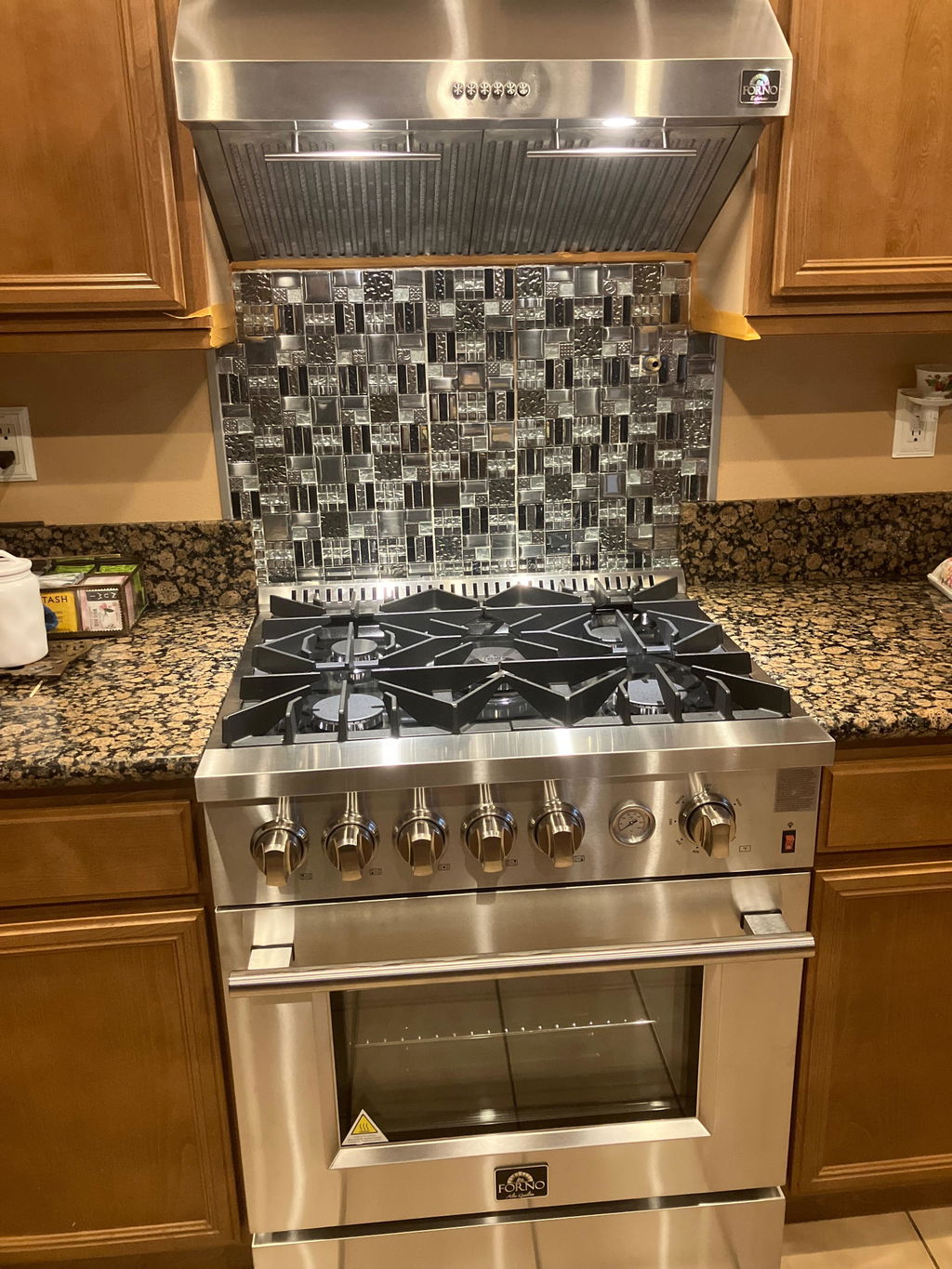
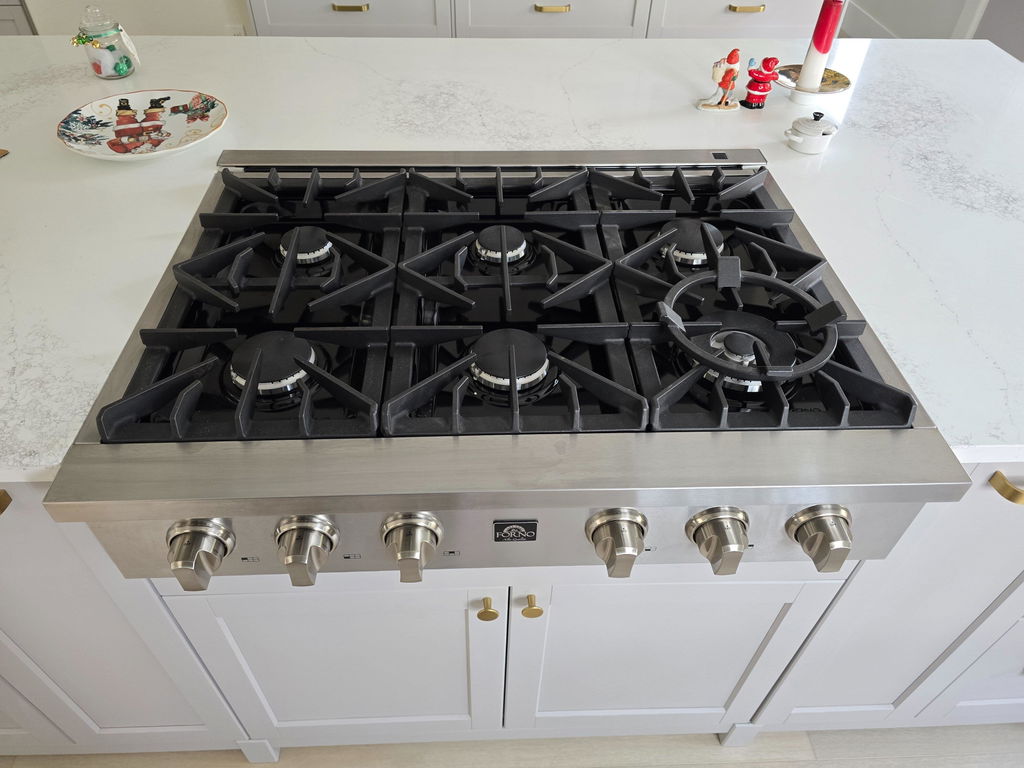
Professional-style gas ranges often include high-output burners ranging between 15,000 and 20,000 BTUs, allowing for faster boiling, stronger searing performance, and better temperature responsiveness during demanding cooking tasks. For example, premium models like the FORNO Galiano 48” Freestanding French Door Gas Range feature up to 107,000 total BTU output across eight sealed burners, including a 20,000 BTU dual-ring burner capable of maintaining a precise low simmer around 1,000 BTUs.
Looking for professional-level cooking performance? The FORNO Galiano 48" Freestanding French Door Gas Range combines powerful burners, spacious oven capacity, and premium styling for serious home chefs.
Why many cooks prefer gas:
- Instant flame adjustment
- Better temperature responsiveness
- Easier high-heat cooking and searing
- Compatible with specialty cookware like woks and griddles
That said, electric ranges tend to provide more even oven baking temperatures, which some users prefer for baking cakes, pastries, and breads.
Energy Efficiency & Running Costs
When comparing a gas range versus electric range, long-term operating costs are often overlooked.
According to energy industry averages, natural gas is typically cheaper than electricity in many regions, which can make gas ranges more economical over time for households that cook frequently. However, installation costs may be higher if a gas line is not already available in the home.
Electric ranges are generally simpler to install and may have lower upfront setup costs. Induction electric models are also becoming increasingly energy-efficient, although they usually come at a higher purchase price.
It’s also worth noting that many modern electric ranges now use induction cooking technology, which heats cookware directly through electromagnetic energy rather than traditional heated elements. Induction ranges typically heat faster, improve energy efficiency, and offer more responsive temperature control than standard electric cooktops, although they require compatible magnetic cookware.
In general:
- Gas ranges: Lower ongoing fuel costs, stronger cooking performance
- Electric ranges: Easier installation, potentially lower initial setup complexity
Cleaning & Maintenance
Ease of cleaning is one area where electric ranges often have the advantage.
Most electric models feature smooth glass surfaces that can simply be wiped clean after cooking. Gas ranges typically include burner grates, caps, and recessed surfaces that require more detailed cleaning.
However, many modern gas ranges now include:
- Sealed burners
- Continuous grates
- Easy-clean enamel interiors
- Self-cleaning oven functions
These features have made gas models much more user-friendly than older generations.
Reliability During Power Outages
This is a practical factor many buyers forget to consider.
A gas cooktop can usually still function during a power outage (depending on ignition type), whereas standard electric ranges cannot operate without electricity. For households in areas prone to outages, this added reliability can be a major advantage.
Design & Kitchen Aesthetics
Electric ranges are often chosen for their minimal, streamlined appearance. Smooth cooktops create a clean built-in look that suits many modern kitchens.
Gas ranges, meanwhile, are frequently associated with more professional-style kitchens and heavier-duty cooking performance. Many premium gas models also include larger burner layouts, stronger BTU output, and commercial-inspired styling.
If aesthetics matter, both categories now offer:
- Stainless steel finishes
- Matte black designs
- Slide-in configurations
- Smart cooking features
The decision usually comes down to whether you prioritise sleek simplicity or performance-focused design.
Safety Considerations
Both gas and electric ranges are safe when installed and used properly, but they each come with different considerations.
Gas ranges involve an open flame and require proper ventilation. Electric ranges eliminate open flames but can retain heat long after cooking, which may increase accidental burn risk.
Modern appliances in both categories now commonly include:
- Automatic shut-off features
- Child safety locks
- Flame failure protection
- Residual heat indicators
Proper installation and regular maintenance are important regardless of which option you choose.
Ventilation is another important factor to consider with gas cooking. Higher-output gas ranges — especially professional-style models with powerful burners — often perform best when paired with a quality range hood to help manage heat, steam, and airborne cooking residue during high-temperature cooking.
Which Option Is Best for Families?
For busy households, the best choice often comes down to convenience and cooking habits.
Families who cook multiple meals daily may benefit from the speed and flexibility of gas cooking. Meanwhile, households focused on simplicity and low maintenance may prefer electric models.
If you entertain frequently or cook larger meals, higher-capacity gas ranges with stronger burner configurations can offer noticeable advantages in day-to-day use.
Is a Gas Range Better Than an Electric Range?
There’s no universal answer — it depends entirely on how you cook.
A gas range may be better for you if:
- You cook frequently
- You want precise heat control
- You regularly sear, sauté, or stir-fry
- You prefer a more responsive cooking experience
An electric range may be better if:
- You prioritise easy cleaning
- You bake more often than you stovetop cook
- You prefer a minimalist kitchen aesthetic
- Your home does not already have a gas connection
For many passionate home cooks, gas remains the preferred choice because of its versatility and responsiveness. In fact, professional kitchens have historically relied heavily on gas cooking due to the immediate heat control it provides.
Explore More Kitchen Range Options
If you’re still deciding between a gas range or electric range, exploring both collections side-by-side can help narrow your choice based on size, features, and cooking style.
You can browse our full selection of electric cooking appliances through our electric range collection, or learn more about cooking performance, features, and buying considerations in our complete gas range buying guide.
Forno Products
-
Original price $3,799.00Original price $3,799.00 - Original price $3,799.00Original price $3,799.00Current price $2,399.00$2,399.00 - $2,399.00Current price $2,399.00
FORNO Guardia 46.8" 21.6 cu. ft. Side-By-Side Refrigerator with Bottom Freezer in Stainless Steel- FFFFD1778-48
FORNOOut of stockProduct Overview: The FORNO Guardia FFFFD1778-48 46.8″ Side-by-Side Refrigerator with Bottom Freezer delivers premium storage, efficient cooling, ...
View full detailsOriginal price $3,799.00Original price $3,799.00 - Original price $3,799.00Original price $3,799.00Current price $2,399.00$2,399.00 - $2,399.00Current price $2,399.00Sold out -
Original price $2,443.00Original price $2,443.00 - Original price $2,443.00Original price $2,443.00Current price $2,349.00$2,349.00 - $2,349.00Current price $2,349.00
FORNO Moena Espresso 36" French Door Refrigerator in White, 19.2 cu. ft, FFRBI1820-36WHT
FORNOOut of stockProduct Overview: The Forno Espresso Moena 36 Inch White French Door refrigerator combines style and functionality with its frost-free multi-air fl...
View full detailsOriginal price $2,443.00Original price $2,443.00 - Original price $2,443.00Original price $2,443.00Current price $2,349.00$2,349.00 - $2,349.00Current price $2,349.00Sold out -
Original price $2,469.00Original price $2,469.00 - Original price $2,469.00Original price $2,469.00Current price $1,899.00$1,899.00 - $1,899.00Current price $1,899.00
FORNO Gallipoli Espresso 30"-Wide White French Door Refrigerator with Bottom Freezer 17.5 Cu. Ft. Capacity - No Frost with Ice Maker, FFFFD1974-31WHT
FORNOOut of stockProduct Overview: The Forno Espresso Gallipoli 31 Inch White French Door refrigerator combines style and functionality with its frost-free multi-ai...
View full detailsOriginal price $2,469.00Original price $2,469.00 - Original price $2,469.00Original price $2,469.00Current price $1,899.00$1,899.00 - $1,899.00Current price $1,899.00Sold out -
Original price $2,699.00Original price $2,699.00 - Original price $2,699.00Original price $2,699.00Current price $1,899.00$1,899.00 - $1,899.00Current price $1,899.00
FORNO Marco 36" 5.36 cu.ft. Gas Range with 6 Burners and Built-In Temperature Gauge, FFSGS6277-36
FORNOin stockProduct Overview: The Forno Marco 36 Inch Gas Range brings professional styling and performance into your kitchen with its durable stainless-steel ...
View full detailsOriginal price $2,699.00Original price $2,699.00 - Original price $2,699.00Original price $2,699.00Current price $1,899.00$1,899.00 - $1,899.00Current price $1,899.00Save 30% -
Original price $3,528.00Original price $3,528.00 - Original price $3,528.00Original price $3,528.00Current price $2,349.00$2,349.00 - $2,349.00Current price $2,349.00
FORNO Spezia Alta Qualita 48" Pro-Style Gas Rangetop, FCTGS5751-48
FORNOOut of stockProduct Overview: The Forno Spezia 48 Inch gas rangetop features a versatile configuration with 8 sealed dual brass burners totaling 160,000 BTUs,...
View full detailsOriginal price $3,528.00Original price $3,528.00 - Original price $3,528.00Original price $3,528.00Current price $2,349.00$2,349.00 - $2,349.00Current price $2,349.00Sold out


Leave a comment